
50/30/20 Rule Budgeting: Complete Guide for Beginners (India)
 Managing money can often feel confusing, especially when there are so many expenses to handle every month. The 50/30/20 rule budgeting is a simple budgeting method that helps you organise your income without making things complicated.
This rule divides your monthly income into three parts: needs, wants, and savings. It gives you a clear idea of where your money should go, so you can avoid overspending and still enjoy your life.
Instead of restricting you, this method creates a balance between living comfortably today and securing your future.
How the 50/30/20 Rule Works in Real Life
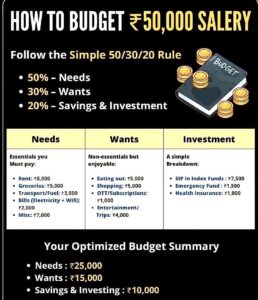
The idea behind this rule is very straightforward. You divide your income into three categories:
50% for Needs (Essential Expenses)
This portion of your income is used for things that are necessary for your daily life. These are expenses you cannot avoid.
For example, rent or home loan EMI, groceries, electricity bills, transportation, and insurance all fall under this category. These are basic requirements that keep your life running smoothly.
30% for Wants (Lifestyle Expenses)
This part is for the things that make life enjoyable but are not essential.
Dining out, shopping, subscriptions, travel, and entertainment come under this category. These expenses are important for maintaining a good lifestyle, but they should be controlled to avoid unnecessary financial pressure.
20% for Savings and Investments
This is the most important portion for your long-term financial health.
This includes saving money, investing in SIPs, building an emergency fund, or planning for retirement. Even though it may feel difficult at first, setting aside this portion regularly can make a big difference over time.
Example of the 50/30/20 Rule
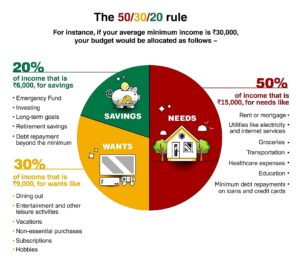
Let’s understand this with a simple example.
If your monthly income is ₹30,000, you can divide it like this:
₹15,000 for needs
₹9,000 for wants
₹6,000 for savings and investments
This structure helps you manage your expenses without losing control of your finances.
Why the 50/30/20 Rule Works
One of the biggest advantages of this method is its simplicity. You do not need any advanced financial knowledge to follow it.
It helps you stay aware of your spending habits, encourages regular saving, and reduces financial stress. Over time, it builds discipline and improves your financial stability.
When you consistently follow this rule, you start making better decisions with your money.
How to Start Using the 50/30/20 Rule
You can begin using this rule with a few simple steps.
Start by calculating your total monthly income. Then, track your expenses to understand where your money is currently going. Once you have a clear picture, divide your spending into needs, wants, and savings.
After that, adjust your expenses to match the 50/30/20 ratio as closely as possible. You can also automate your savings so that a portion of your income is saved before you spend the rest.
Is This Rule Suitable for Everyone?
The 50/30/20 rule is flexible and can be adjusted based on your situation.
If your income is lower, your essential expenses may take up more than 50 percent. In that case, you can reduce spending on wants and slowly build your savings.
If your income is higher, you can increase your savings percentage to grow your wealth faster.
The key is to use this rule as a guide, not a strict formula.
Common Mistakes to Avoid
Many people struggle with budgeting because they do not track their expenses properly. Small daily expenses can add up quickly and disturb your budget.
Another common mistake is confusing wants with needs. This often leads to overspending.
Skipping savings is also a major issue. Even a small amount saved regularly is better than saving nothing at all.
Being consistent is more important than being perfect.
Final Thoughts
The 50/30/20 rule is a practical way to take control of your finances. It helps you balance your present needs with future goals without making life feel restricted.
You do not need to follow it perfectly from the beginning. Start with small changes, stay consistent, and improve over time.
With discipline and awareness, this simple method can help you build a secure and stress-free financial future.
Leave a Comment